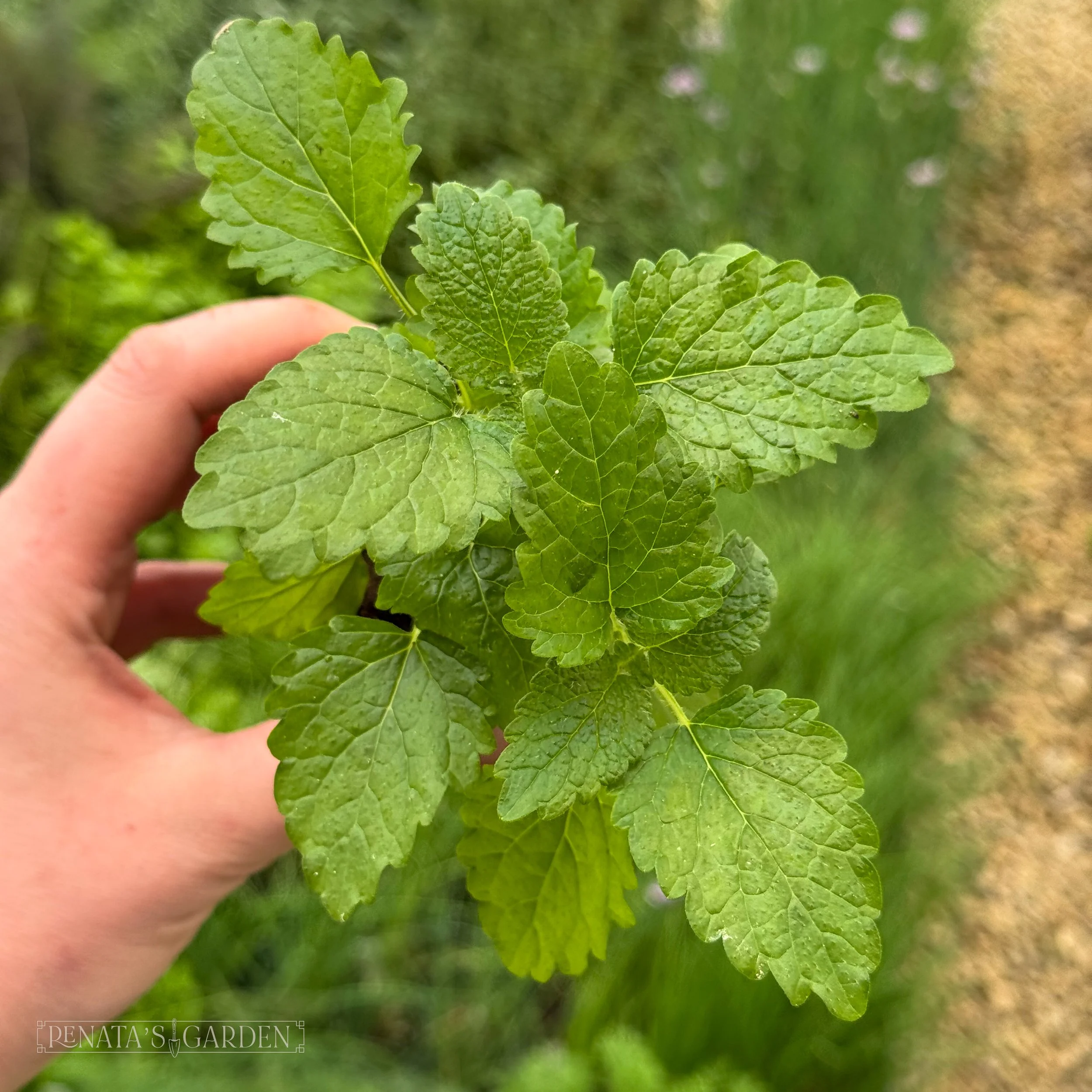
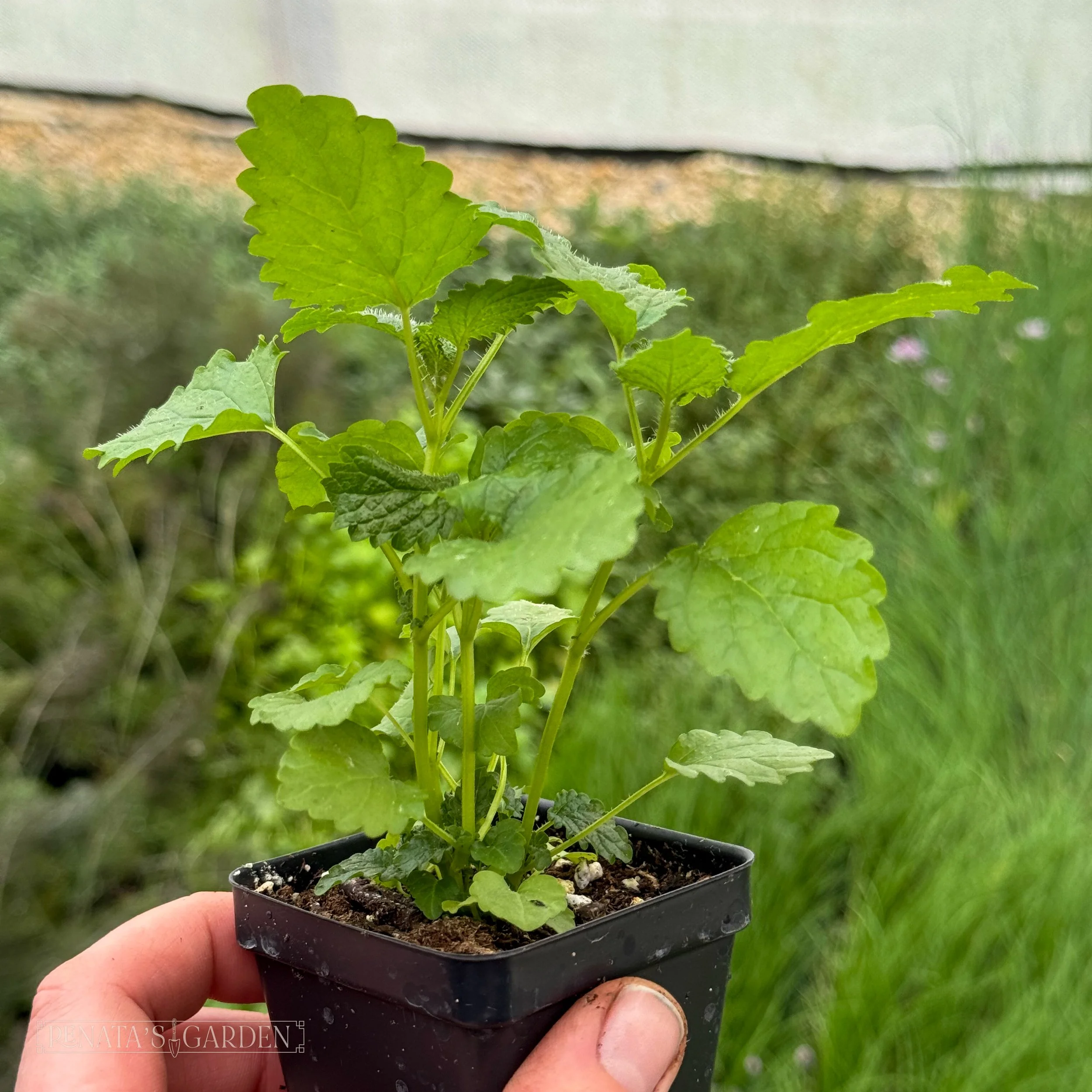
Lemon Balm
Melissa officinalis
-
When to Plant: If transplanting rather than growing from seed, lemon balm is best transplanted outside after the danger of frost has passed.
Click here to find your last frost date.
Lemon balm is annual but will re-seed extensively.
Light: Partial to Full Sun
Soil: Well-drained soil is best, but bee balm does well in clay soil as well. If planting in a container, use general-purpose potting mix.
Plant in a sunny area with good air circulation to prevent powdery mildew.
Remember that bee balm is in the mint family and some species, like wild bergamot, will spread via root and self-seed. Plant accordingly.
-
Lemon balm needs regular watering to establish when young but will tolerate dry down more readily the more mature the plant becomes.
Provide moisture when the top 2” of soil/mix is dry. Time between watering cycles is determined by your soil type and climate. If in a container, daily watering may be necessary.
-
If planted in a container, try a slow-release fertilizer for easy care, following the recommended bottle rates. Sometimes, potting mixes incorporate slow release fertilizer that lasts for 6 months.
Fertilize lightly if planted in ground as too much fertilizer is unnecessary for most mint family members.
-
Lemon balm is usually grown more for the scent and pollinator friendly aspects, but because of its intense citrus flavor, it can be harvested and incorporated into infused beverage or food.
New growth will be the most flavorful, so if growing for edible use, make sure you prune regularly to flush fresh growth for consumption.
-
Container planting is ideal for this mint family member since it is known to be an aggressive spreader by both underground growth and by seed. Remove blooms to prevent reseeding if containment is desired.
My Lemon Balm Pictures